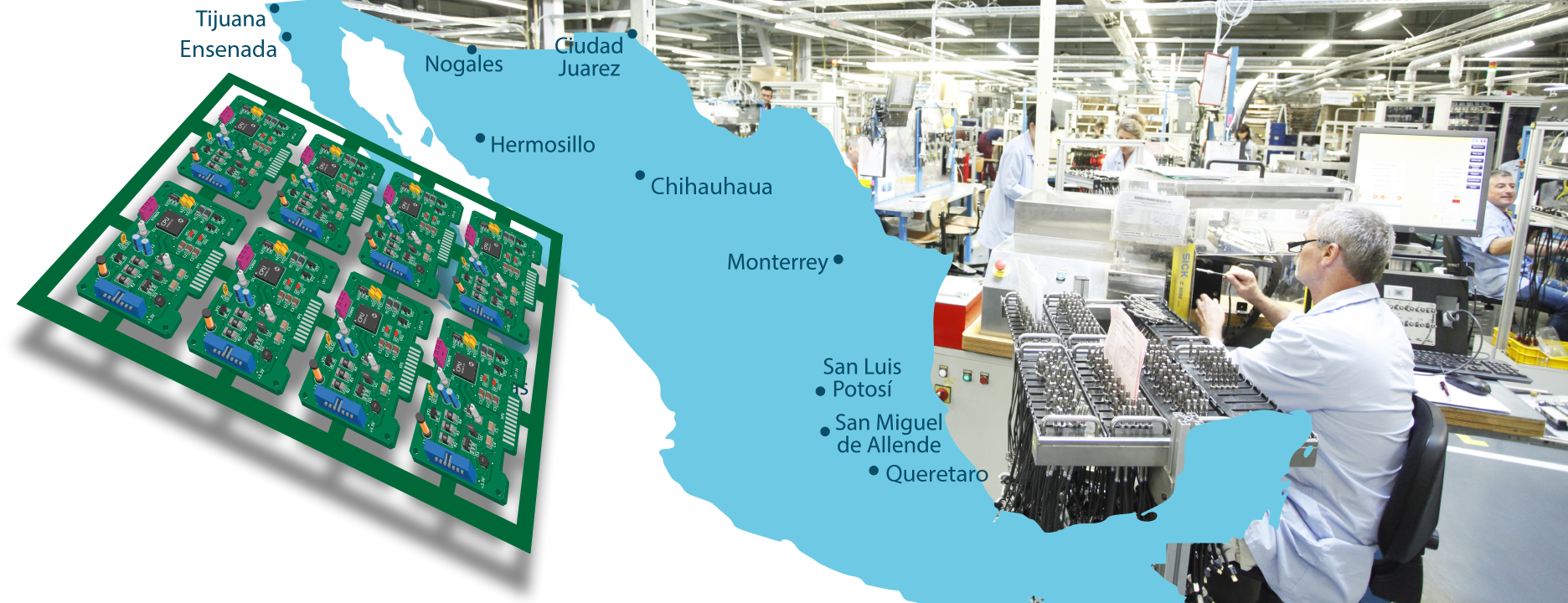
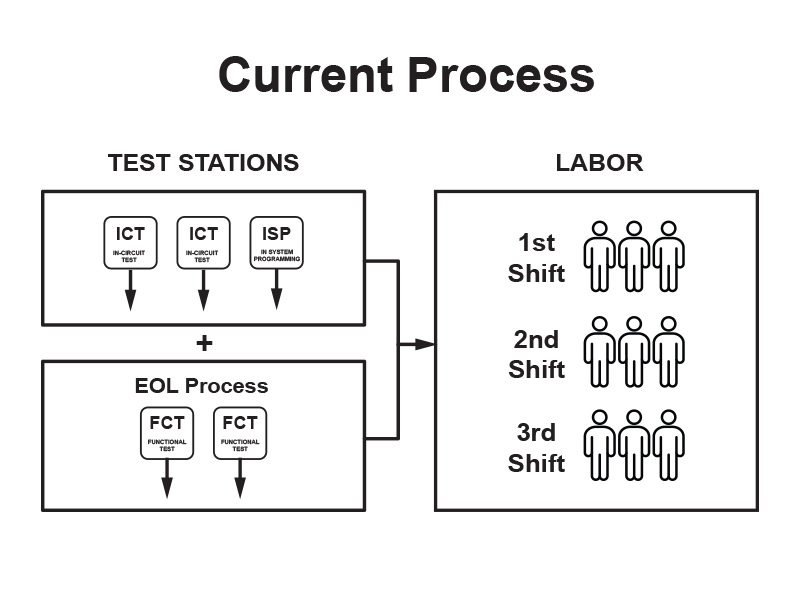
A global tier-one automotive supplier in Mexico needed to lower total test cost and keep pace with SMT. Their traditional test process separated ICT, programming, and FCT—creating a bottleneck before EOL and pushing too much verification to end-of-line, where it required extra stations, fixtures, and operators.
CheckSum Parallel Test Process Analysis - What We Unlocked
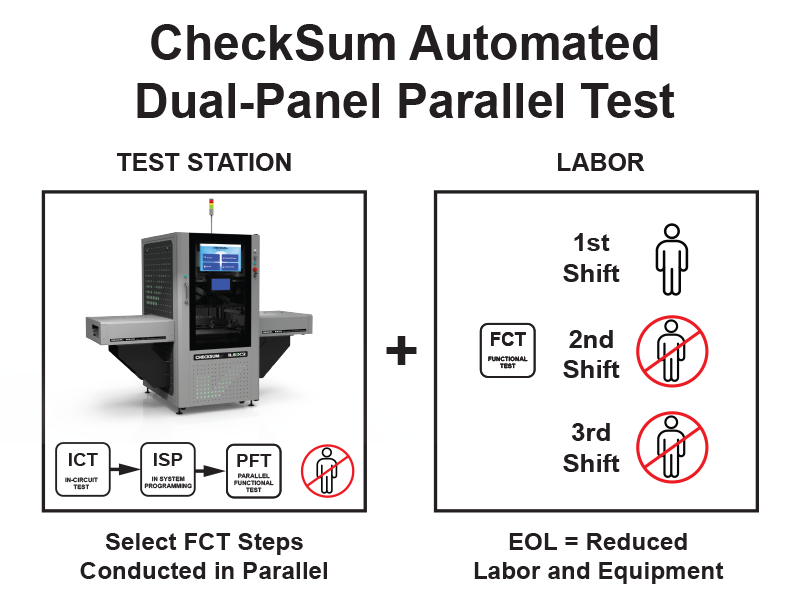
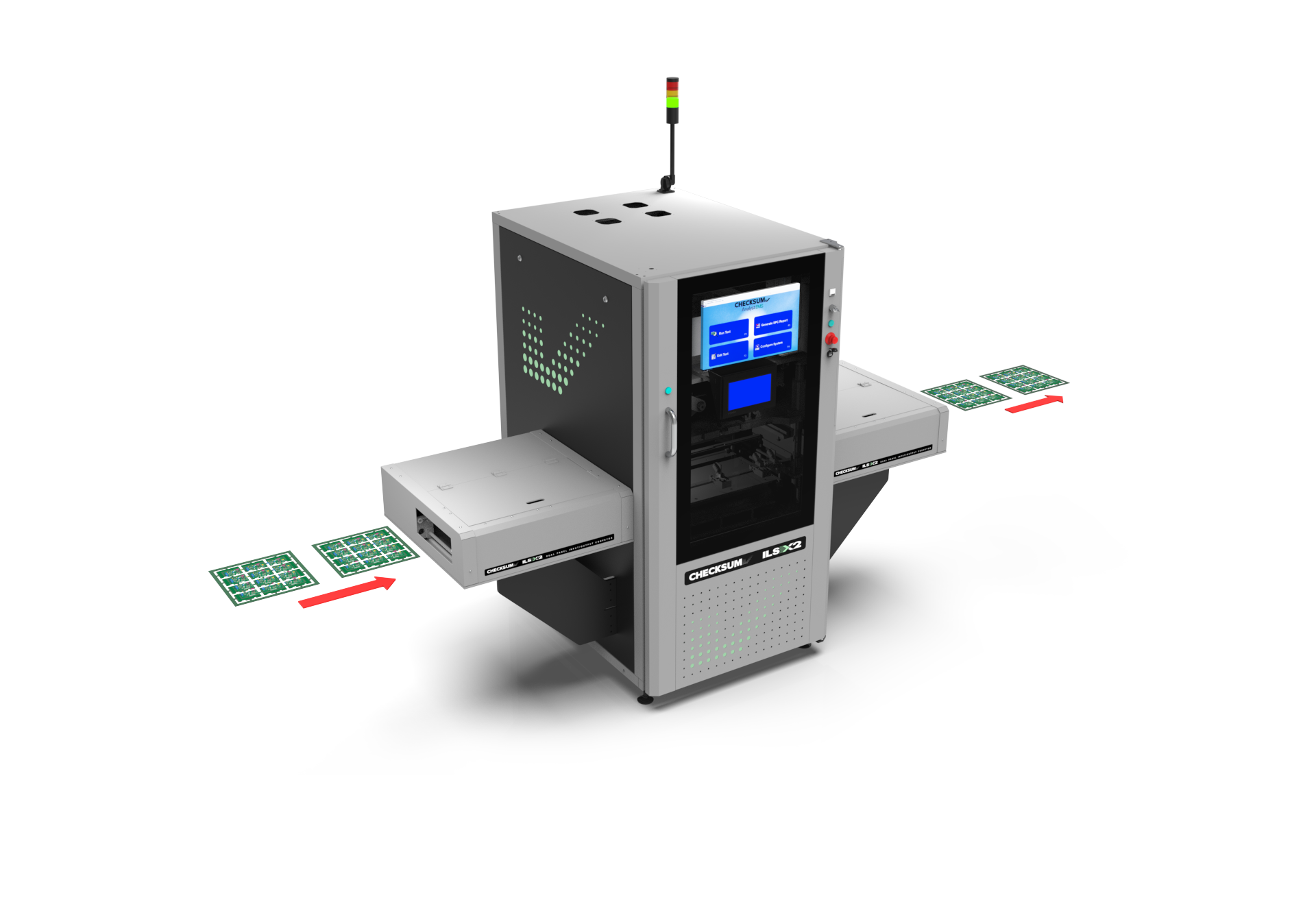
Bring Key FT Forward. Lighten EOL. For the customer’s 8-up CAN-module project, our analysis showed that a single ILS-X2—running sequential dual-panel handling with Quad-Core ICT—can execute a balanced two-bed flow.
The Big Win: moving select functional tests to the panel level, which reduced EOL time, cut EOL tester/operator load, and trimmed fixtures/equipment—while keeping critical housing-dependent checks at EOL.
Why it Mattered:
Faster Cycle & Handling: One integrated cell replaces multiple handoffs.
Balanced with SMT: Dual-Panel + Quad-Core ICT keep pace with SMT TAKT time.
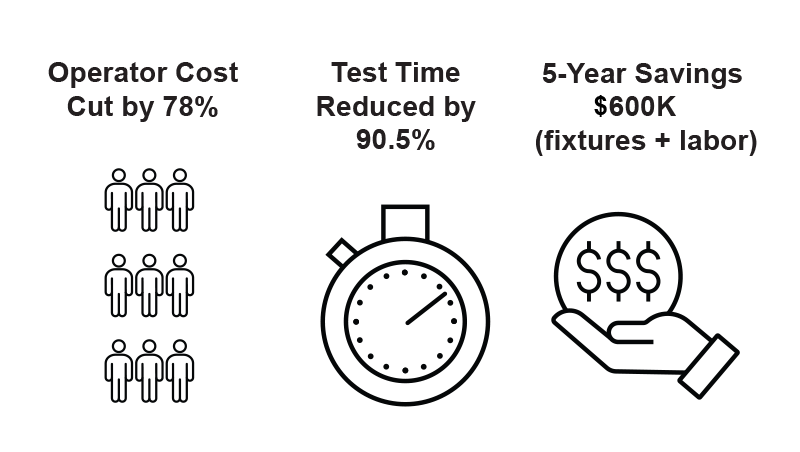
Lower Total Cost: Fewer EOL stations, fewer operators, fewer fixtures; >$250k Year-1, ≈$600k over 5 years.
Current Process vs CheckSum
Parallel. Balanced. Flexible.
Parallel - ICT + ISP + PFT in one automated cell -processing two 8-up panels per cycle to compress test time.
Balanced - Dual-panel sequential process eliminates idle time unlocking faster throughput to keep pace with SMT.
Flexible - Faster speed allows key FT at panel level, creating new options to mix concurrent/sequential strategies by product.
Results:
Substantial cost reduction, enhanced quality, freed-up floor space, and higher throughput capacity — uniquely enabled by CheckSum’s parallel test + parallel handling architecture.
Let's Talk About Your Project -- Request Your Free Analysis Now.
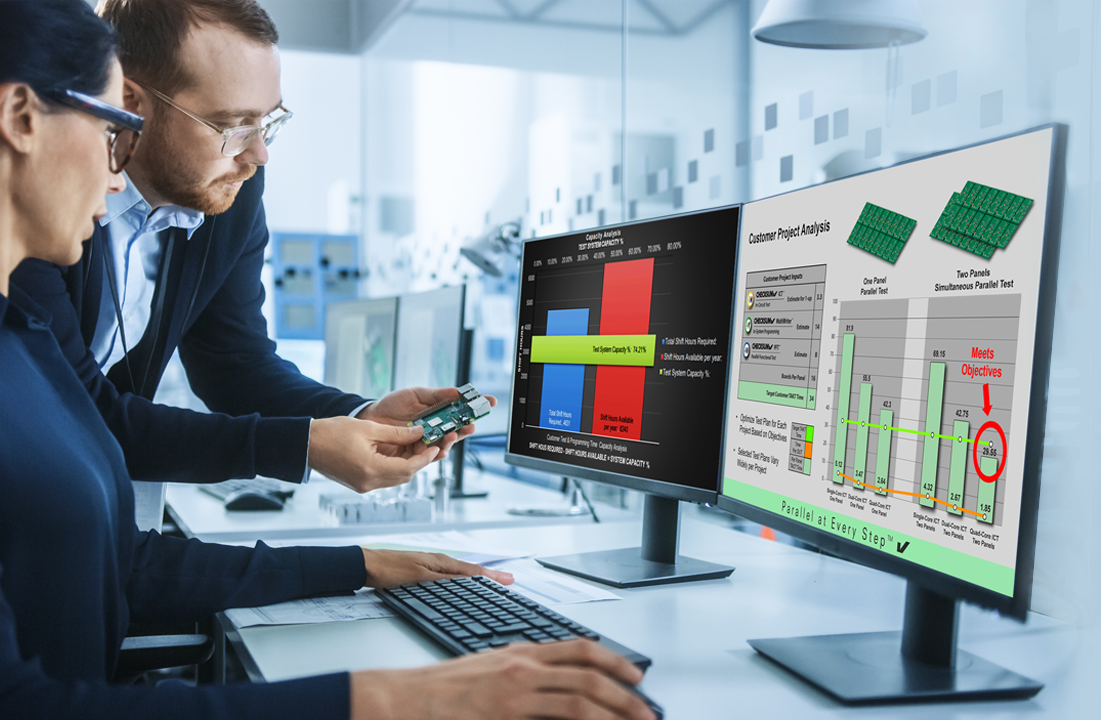
With CheckSum's FreeParallelTest Project Analysis, you get real test process insights -- based on your application -- with no obligation.
Here's What You Will Get with Your Free Project Analysis:
CheckSum’s Parallel Test consolidates ICT, ISP, and functional test into one streamlined, automated flow.
Full application review – understanding your boards, panels, and test requirements
ICT analysis – test time and coverage review
Programming analysis – time estimates and security/feasibility checks
Functional test evaluation – including opportunities for Parallel Functional Test (PFT)
Automated handling time assessment – compare single-panel vs. dual-panel operation
Throughput & capacity estimates – TAKT and complete line-speed analysis
System configuration recommendations – tailored to your application
Budgetary costs – for both test systems and fixtures
Your Results:
A complete, actionable plan to reduce test cost, minimize operator reliance, streamline handling, and keep your test capacity aligned with SMT production.