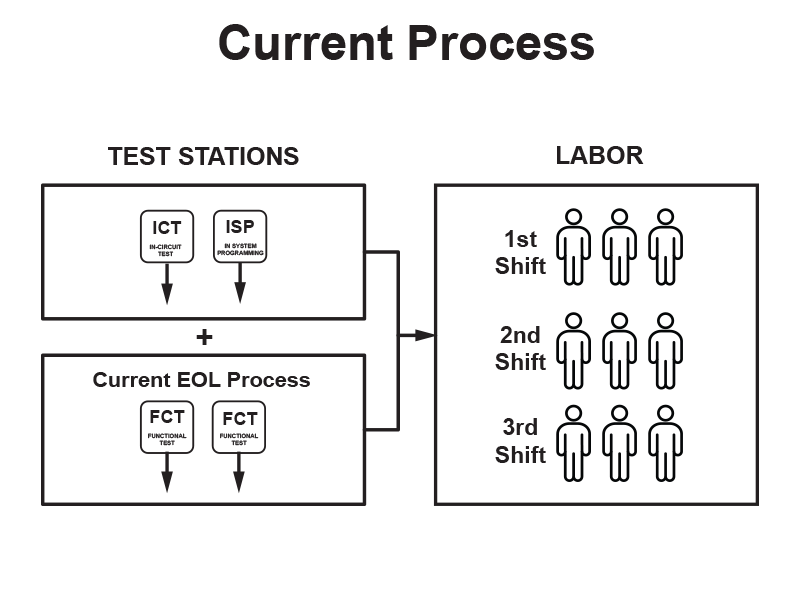
A leading tier-one automotive supplier in Eastern Europe set out to match test throughput to the SMT line, compress cycle time, and reduce test cost. Their incumbent process relied on separate ICT, ISP, and functional test stations, each requiring operators, fixtures, and handling steps. This architecture was expensive, slow, and consumed valuable floor space.
Parallel Test Process Analysis Unlocks Significant Savings
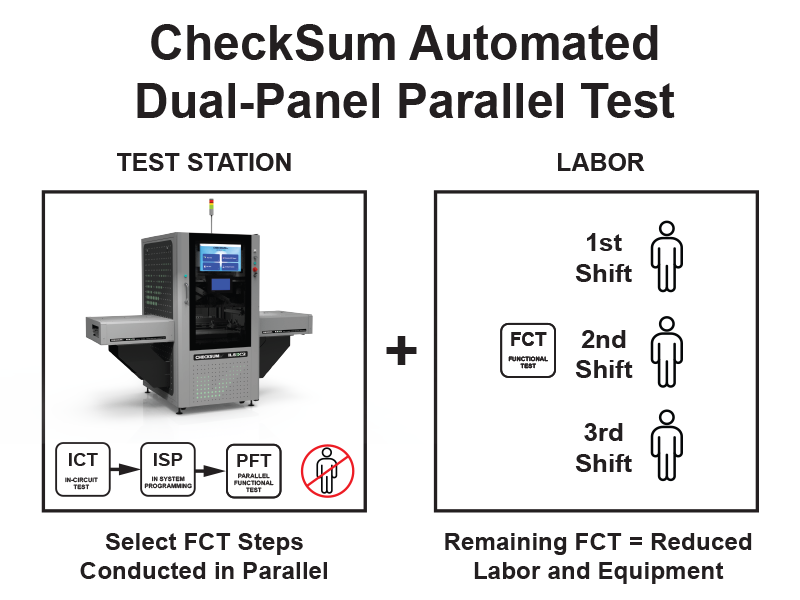
Analysis shows that by consolidating ICT, ISP, and select CAN / LIN communications tests onto a parallel test platform with dual-panel handling, the customer could significantly cut cost, labor, and floor space while increasing throughput to keep pace with SMT output.
Why it Mattered
Eliminated one functional test station and one operator
First Year Fixture + labor savings: $160,000
Reduced footprint by consolidating 5 test systems down to 1
Balanced test meets SMT speed with Dual Panel Parallel ICT/ISP/PFT
Improved quality by reducing manual handling
Avoidance of costly capital spend on additional ICT, ISP, and FCT systems
Current Process vs CheckSum
The Parallel Test Advantage
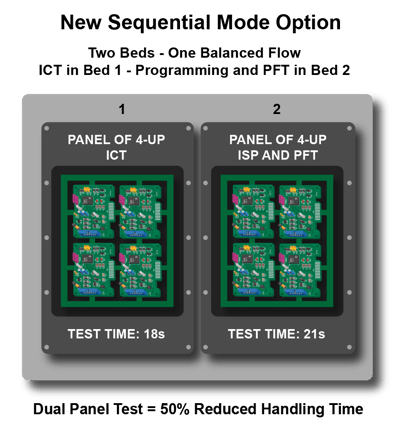
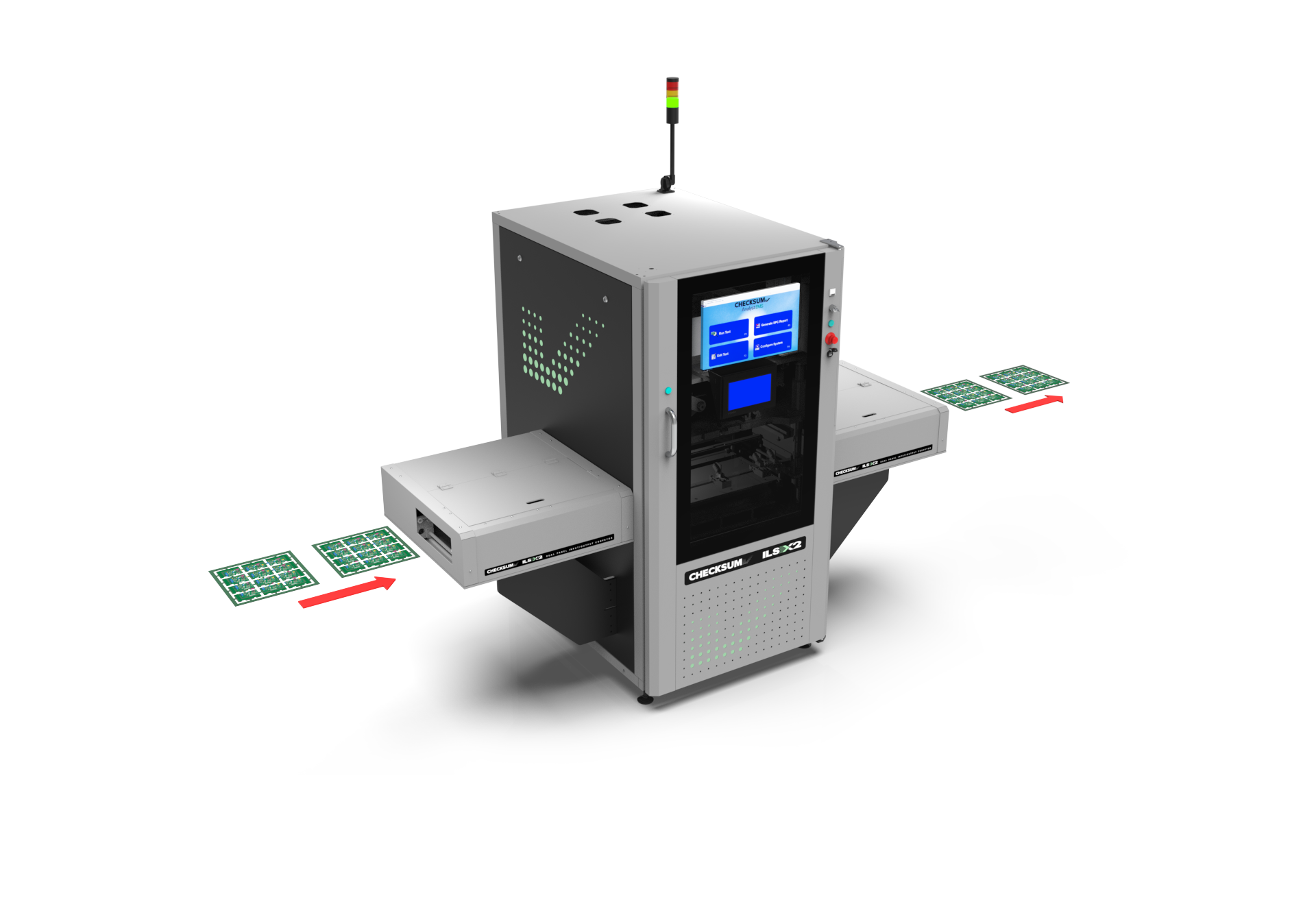
For this 4-UP ECU, a single ILS-X2 in sequential mode with Quad-Core ICT and dual-panel handling creates a two-bed cadence -- ICT on one bed, ISP/select FCT on the other -- maintaining balanced flow.
Consolidate ICT, ISP and Select FCT steps into a single automated system. Eliminate five operators, four fixtures, and ~80% of test-cell footprint. Redeploy legacy ICT/ISP systems on projects that don't require parallel test. Reduce operating costs (fixtures + labor) by >70%. Increase throughput with dual-panel handling + quad-core ICT.
Two Beds. One Balanced Flow.
Bed 1: Executes ICT testing on one panel
Bed 2: Executes ISP and Select FCT on second panel
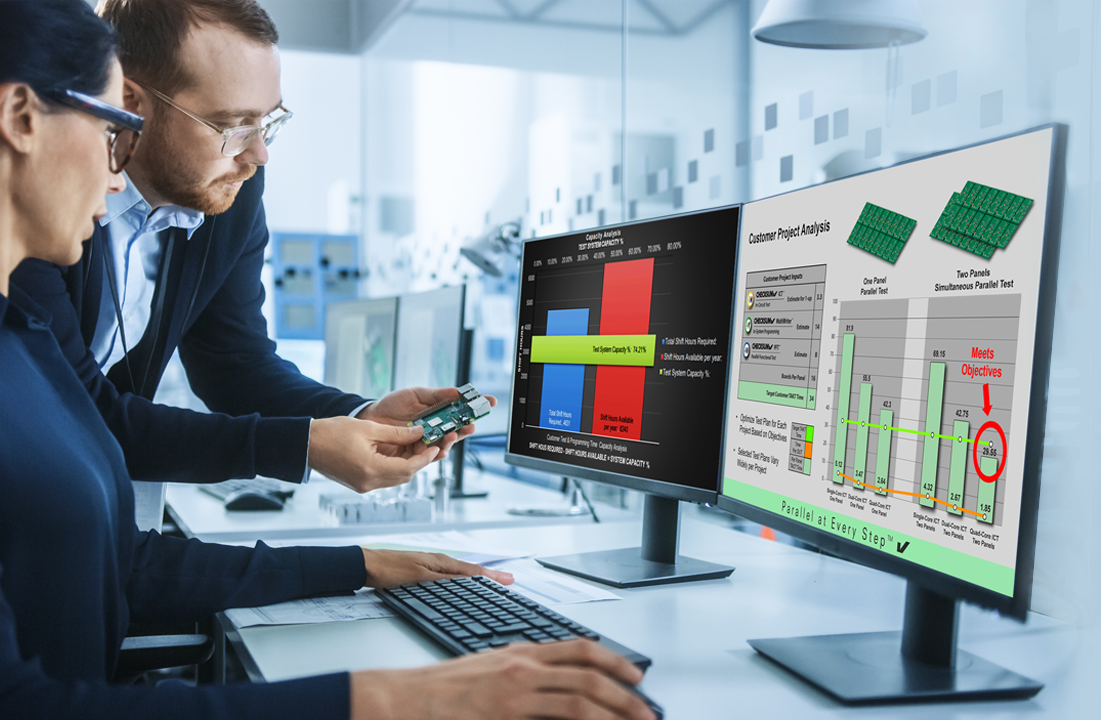
Per DUT test time reduced from 25 to 6 seconds
That flexibility — the ability of the ILS-X2 to handle two panels sequentially, yet run test steps in parallel — was a key differentiator in our analysis. It allowed the customer to collapse multiple test stages into a single automated station, sharply reduce handling time and test time, and remove operator intervention relative to current modular architectures.
Balance. Accelerate. Reduce.
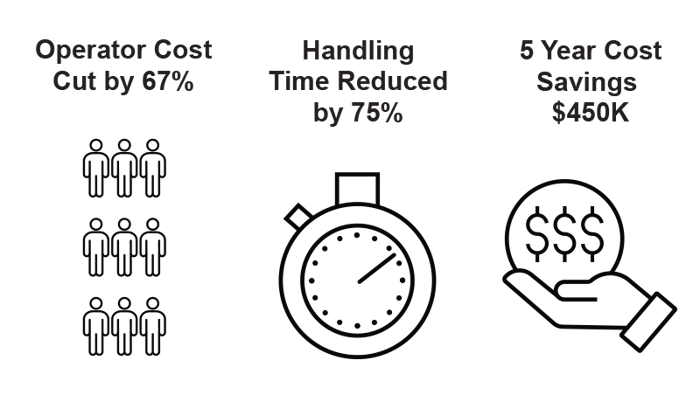
By moving select FCT steps to the panel level inside the sequential dual-panel ILS-X2, testingis accelerated and functional test expense reduced, generating$450K savings over five years with a smaller footprint than the previous test cell.
Substantial cost reduction, enhanced quality, freed-up floor space, and higher throughput capacity — uniquely enabled by CheckSum’s parallel test + parallel handling architecture.
Let's Talk About Your Project -- Request Your Free Analysis Now.
With CheckSum's FreeParallelTest Project Analysis, you get real test process insights -- based on your application -- with no obligation.
Here's What You Will Get with Your Free Project Analysis:
CheckSum’s Parallel Test consolidates ICT, ISP, and functional test into one streamlined, automated flow.
Full application review – understanding your boards, panels, and test requirements
ICT analysis – test time and coverage review
Programming analysis – time estimates and security/feasibility checks
Functional test evaluation – including opportunities for Parallel Functional Test (PFT)
Automated handling time assessment – compare single-panel vs. dual-panel operation
Throughput & capacity estimates – TAKT and complete line-speed analysis
System configuration recommendations – tailored to your application
Budgetary costs – for both test systems and fixtures
Your Results:
A complete, actionable plan to reduce test cost, minimize operator reliance, streamline handling, and keep your test capacity aligned with SMT production.