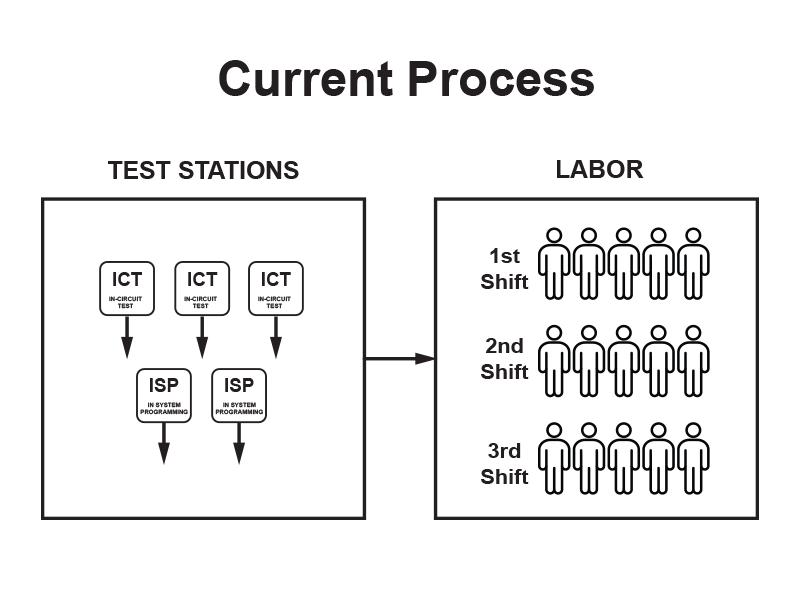
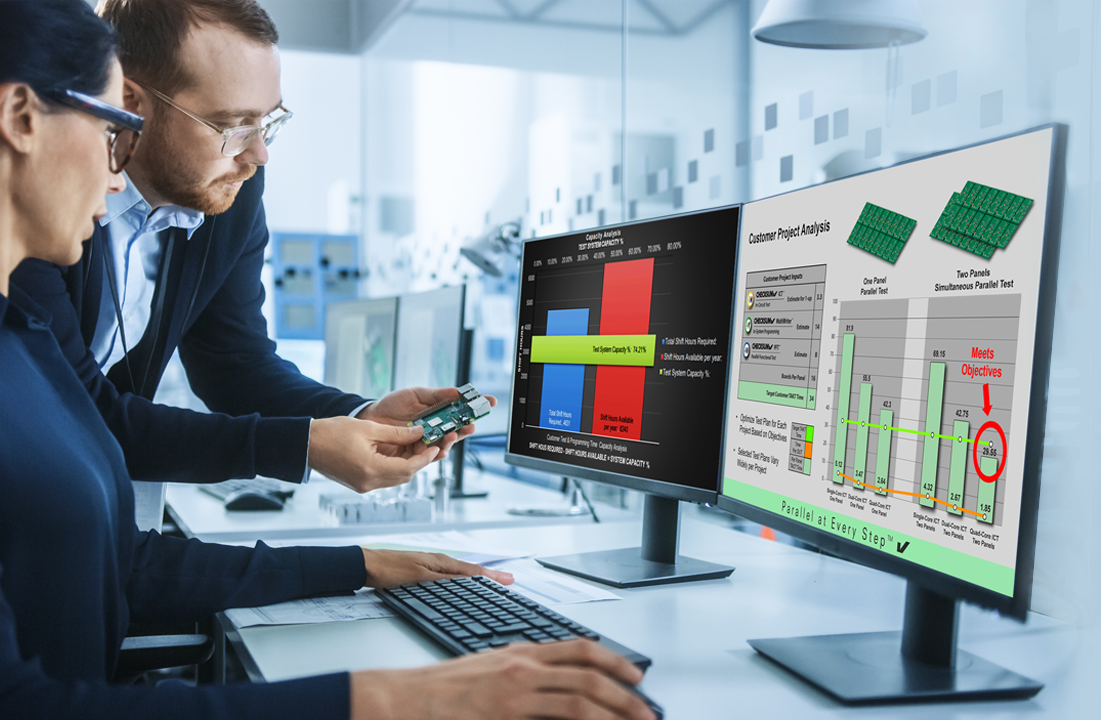
Test teams at a tier-one global EMS supplier faced increasing pressure to reduce the overall cost of test while eliminating bottlenecks. Their existing ICT/ISP process required multiple operators and fixtures, raising operating costs, slowing throughput, and consuming valuable production floor space with five separate test systems.
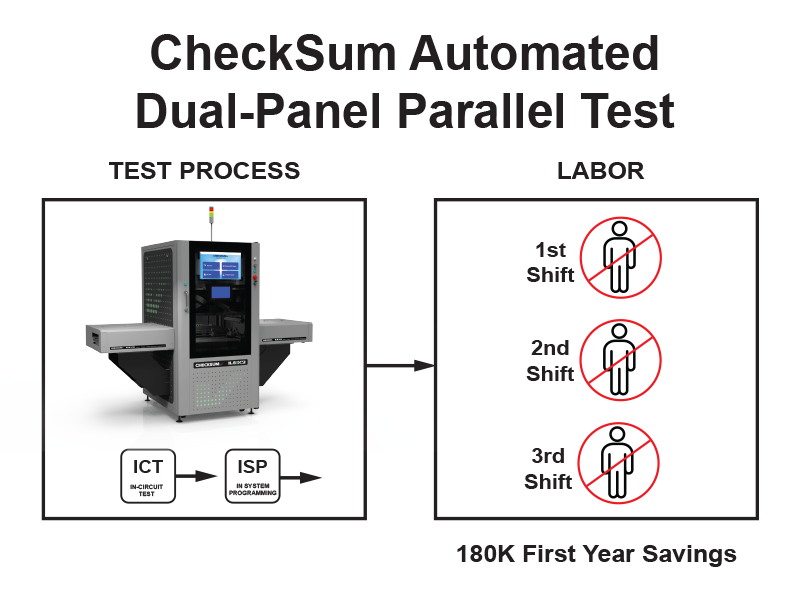
Current Process vs CheckSum
The Parallel Test Advantage
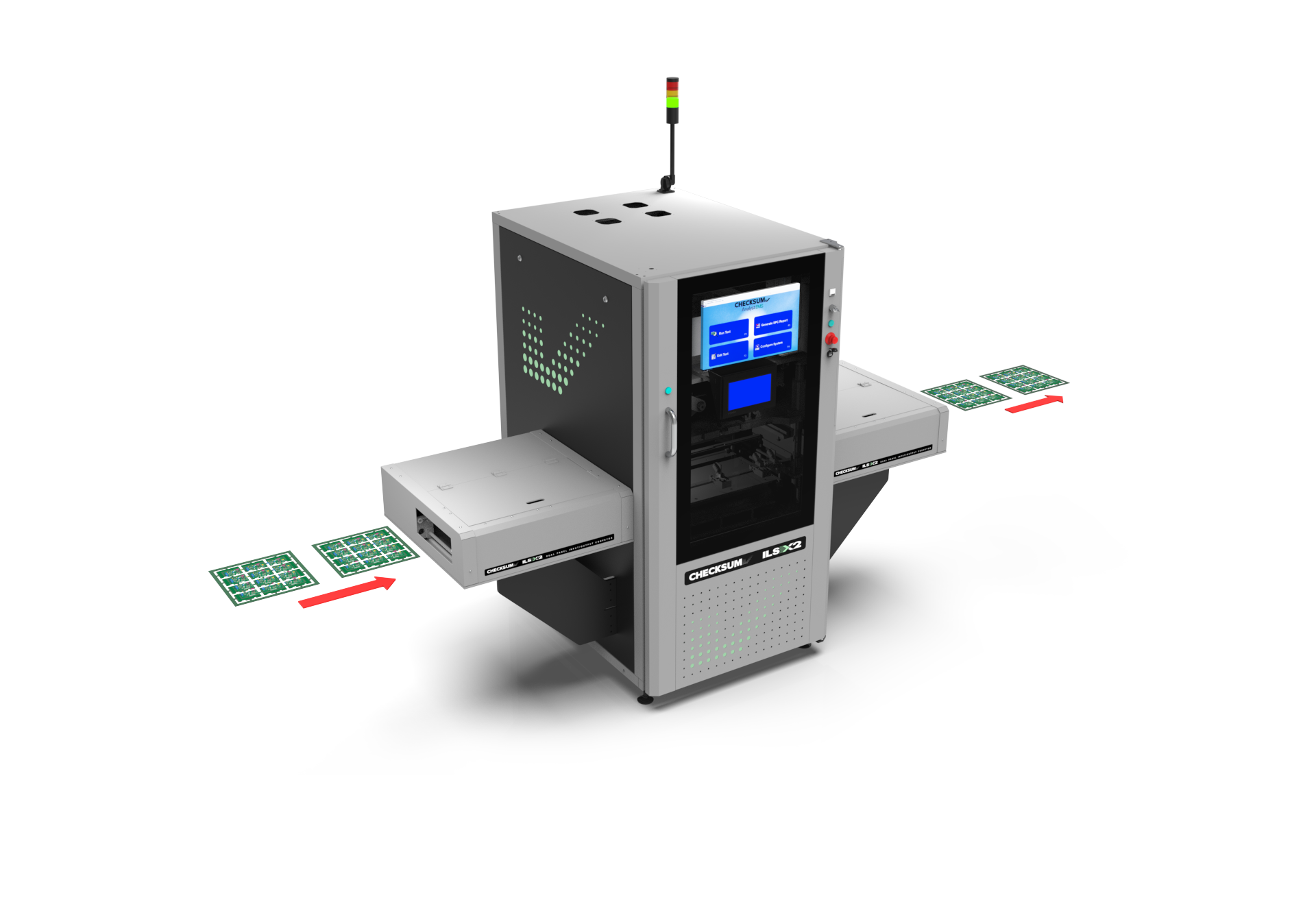
Analysis showed that by consolidating ICT and ISP into one automated flow with dual-panel handling, the customer could significantly cut cost, labor, and floor space while increasing throughput to keep pace with SMT output.
Consolidate ICT & ISP into a single automated system. Eliminate five operators, four fixtures, and ~80% of test-cell footprint.
Redeploy legacy ICT/ISP systems on projects that do not require parallel test capabilities.
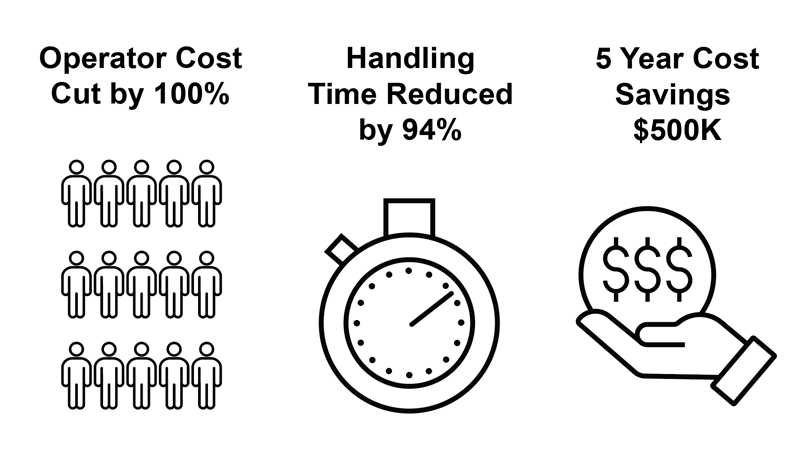
Reduce operating costs (fixtures + labor) by >70%.
Increase throughput with dual-panel handling + quad-core ICT.
Results:
A leaner, higher-capacity test cell with lower cost, fewer resources, and more efficient use of systems — enabled by CheckSum’s dual-panel handling and parallel-test architecture.
Consolidate. Eliminate. Redeploy.
CheckSum’s Parallel Test Consolidates ICT and ISP into One Automated Flow.
Consolidate - ICT and ISP into one automated fixture.
Eliminate - five operators, four fixtures, and 80% of the test cell footprint.
Redeploy - legacy systemson projects that do not require parallel test capabilities.
Results:
Substantial cost reduction, lean test process, freed-up floor space, and higher throughput — uniquely enabled by CheckSum’s parallel test + parallel handling architecture.
Let's Talk About Your Project -- Request Your Free Analysis Now.
With CheckSum's FreeParallelTest Project Analysis, you get real test process insights -- based on your application -- with no obligation.
Here's What You Will Get with Your Free Project Analysis:
CheckSum’s Parallel Test consolidates ICT, ISP, and functional test into one streamlined, automated flow.
Full application review – understanding your boards, panels, and test requirements
ICT analysis – test time and coverage review
Programming analysis – time estimates and security/feasibility checks
Functional test evaluation – including opportunities for Parallel Functional Test (PFT)
Automated handling time assessment – compare single-panel vs. dual-panel operation
Throughput & capacity estimates – TAKT and complete line-speed analysis
System configuration recommendations – tailored to your application
Budgetary costs – for both test systems and fixtures
Results:
A complete, actionable plan to reduce test cost, minimize operator reliance, streamline handling, and keep your test capacity aligned with SMT production.